
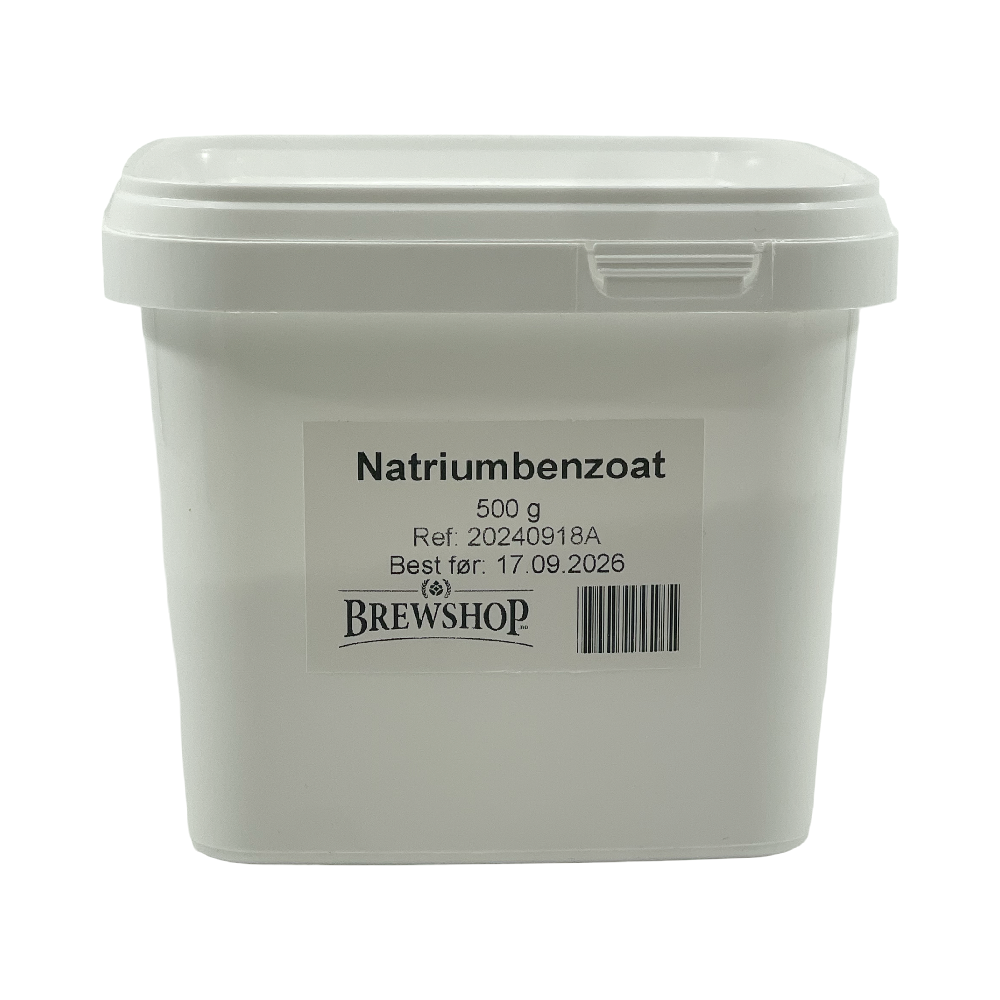

Description
Sodium benzoate 500 g (E211) – preservative against fermentation, mould and bacteria
Sodium benzoate (E211) is a preservative that prevents unwanted fermentation, mould and bacterial growth in sugary products. It is commonly used in soft drinks, cordials, dressings, ketchup, mustard, mayonnaise, fish roe, tomato paste and fruit compotes.
Sodium benzoate is especially useful in products that are not heated after the sugar is added, or that are to be stored for a long time. It works best in acidic solutions with a pH below 4.5, and is therefore often used together with citric acid or other acids.
How to use sodium benzoate
- Typical dose: 0.05–0.1 % (0.5–1.0 g per litre).
- Dissolve the sodium benzoate in a little warm water before adding, for even distribution.
- Add after cooling and with good hygiene, before packaging.
- Adjust the pH to below 4.5 with citric acid if needed.
- Combine with potassium sorbate (E202) against mould and fermentation.
- Avoid mixing sodium benzoate with vitamin C and artificial colourings.
Regulations
Maximum limits apply depending on the type of product. Always check the current regulations for the food you are making. In commercial production the product must be labelled «Contains E211».
Frequently asked questions about sodium benzoate
How much sodium benzoate should I use?
The typical dose is 0.05–0.1 %, i.e. 0.5–1.0 grams per litre. Check the maximum limit for your type of product.
Why does sodium benzoate work best in acidic liquids?
Sodium benzoate works best at a pH below 4.5. In less acidic products you can adjust the pH with citric acid.
Can sodium benzoate be used with potassium sorbate?
Yes. Potassium sorbate (E202) and sodium benzoate are often used together to prevent both mould and fermentation.
What should sodium benzoate not be mixed with?
Avoid mixing sodium benzoate with vitamin C (ascorbic acid) and artificial colourings.
Related
Betaling
Your payment information is processed securely. We do not store credit card details nor have access to your credit card information.