



Description
LalBrew New England 11 g – American East Coast Ale Yeast from Lallemand
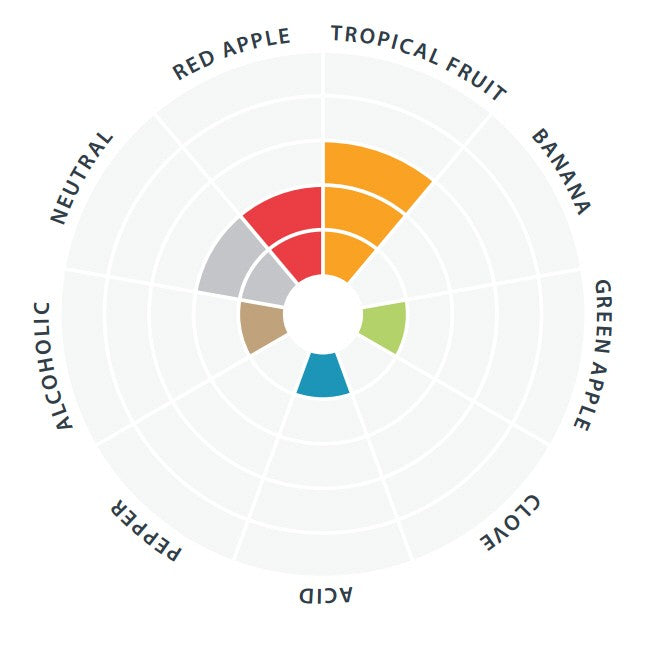
LalBrew New England is a dried ale yeast from Lallemand, selected for the fruit-forward ester profile that East Coast styles such as New England IPA (NEIPA) are known for. The yeast produces tropical and fruity esters, notably stone fruit such as peach, and accentuates hop flavour. Through expression of a β-glucosidase enzyme it can promote hop biotransformation and enhance hop flavour and aroma.
Suitable for
- New England IPA (NEIPA)
- Other hop-forward East Coast ales
Technical data
- Type: Saccharomyces cerevisiae, top-fermenting
- Attenuation: medium to high
- Flocculation: medium
- Fermentation temperature: 15–22 °C
- Alcohol tolerance: 9% ABV
- Pitching rate: 100 g/hl
In Lallemand's standard wort at 20 °C, fermentation is complete in about 7 days, a little slower than most ale strains. The lag phase can be longer than usual, 18–36 hours.
Specifications and instructions
Frequently asked questions about LalBrew New England
How much yeast do I need for 20 litres?
Lallemand recommends 100 g/hl. That is about 20 g for 20 litres, or two 11 g sachets.
What temperature should the yeast ferment at?
The fermentation temperature is 15–22 °C.
Why does fermentation take a while to start?
LalBrew New England can have a lag phase of 18–36 hours, and fermentation takes a little longer than with most ale strains. This is normal for the strain.
When should I dry hop a NEIPA?
NEIPAs are often dry hopped early, while the yeast is still active. That gives you hop biotransformation.
Do I need to rehydrate the yeast?
Lallemand recommends rehydrating the yeast in sterile water at 30–35 °C, especially at high gravity. In many cases, pitching the dry yeast straight onto the wort also gives good results.
Related
Betaling
Your payment information is processed securely. We do not store credit card details nor have access to your credit card information.