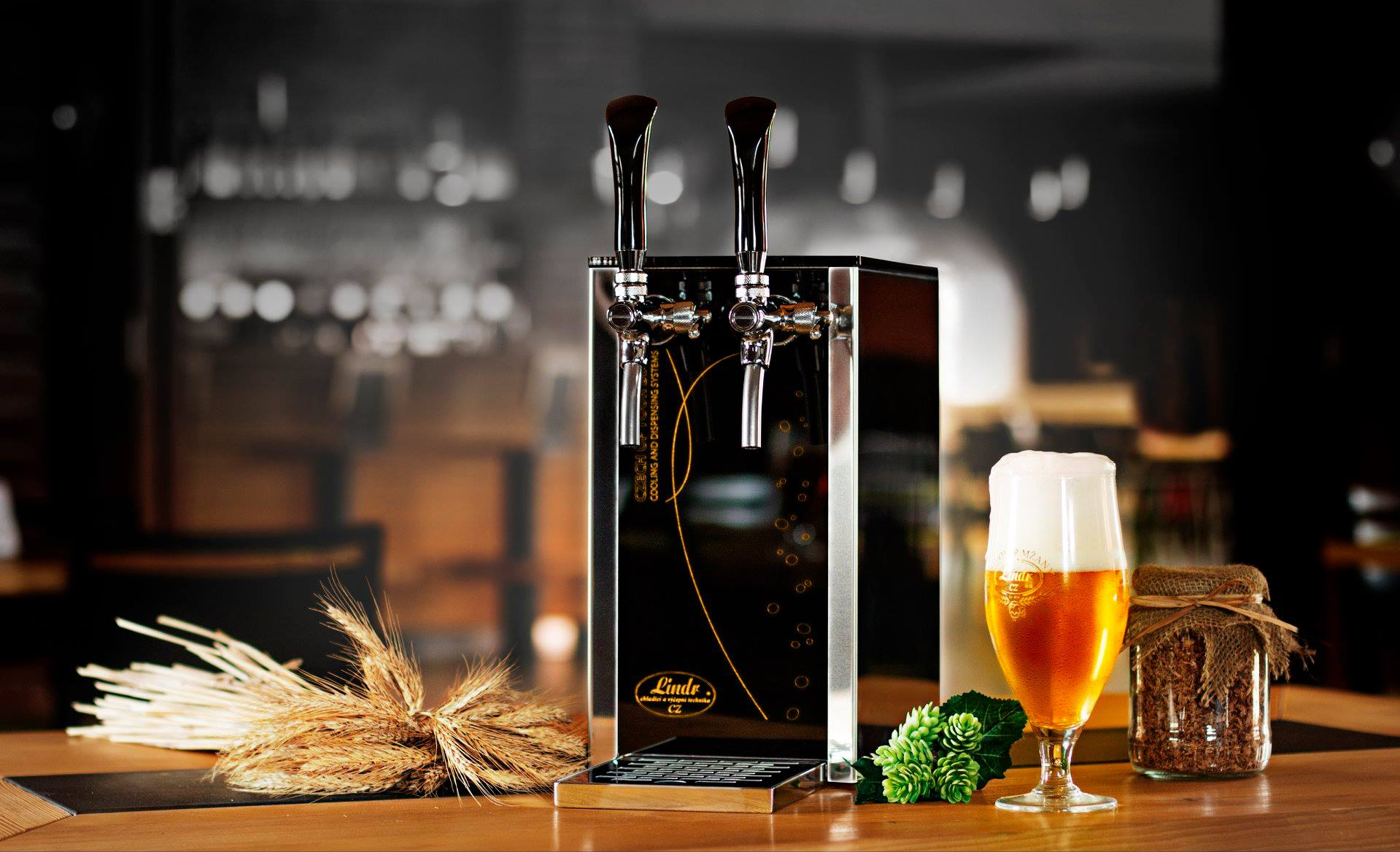
Lindr beer towers are known for high quality, reliable cooling and excellent control when pouring. With active cooling all the way to the tap, Lindr keeps the beer stable and cold, giving an even flow, less foam and a clearly better pouring experience. Both homebrewers and professionals choose Lindr because the solutions are well thought out, robust and built to work in practice.
At the same time, this type of beer tower places slightly different demands on how you handle pressure when pouring:
How to avoid foam – and over-carbonated beer
When you pour beer from a Cornelius keg with an actively cooled Lindr beer tower, different rules apply than with regular, uncooled towers. Many people experience either too much foam – or beer that later becomes over-carbonated. The cause is often incorrect pressure handling.
This article explains why you need to use higher pressure, how line length and diameter affect pouring, and what you must always do after pouring.
Why Lindr towers require higher serving pressure
With a Lindr tower, the entire beer line is cooled, all the way to the tap. This has clear advantages:
-
Stable beer temperature
-
Less CO₂ released in the tap
-
Cleaner and more controlled pouring
But it also means you need to use higher CO₂ pressure to get an even flow without foam.
This is the opposite of what many people are used to from regular beer towers.
In short: what happens if the pressure is too low?
If the pressure is too low when you pour from a cooled Lindr tower:
-
The beer loses pressure in the lines
-
CO₂ is released before the tap
-
The result is a lot of foam
The solution is to increase the serving pressure so that the beer holds its pressure all the way to the glass.
Line length and line diameter – very important
The resistance in the dispensing system is largely determined by the lines.
Long and thin lines
-
Give high resistance
-
Require higher serving pressure
-
Common with foam-reducing (thin) lines
Shorter and wider lines
-
Give lower resistance
-
Require lower serving pressure
-
A more forgiving system
The more resistance in the lines, the higher the pressure you need to use when pouring.
Typical procedure when pouring with Lindr
-
Increase the CO₂ pressure to a level that gives:
-
An even flow
-
Minimal foam
-
-
Pour the amount of beer you want
-
When you have finished pouring:
-
Turn down the pressure on the regulator
-
Open the pressure relief valve on the keg
-
Release the excess pressure
-
This last point is absolutely crucial.
Important: why should the excess pressure be released after pouring?
When you increase the pressure for pouring, extra CO₂ is forced into the beer.
If you forget to release the excess pressure afterwards:
-
The beer keeps absorbing CO₂
-
Carbonation increases
-
The beer becomes over-carbonated
-
The next pour gives even more foam
This is a very common mistake – and it builds up over time.
If you want to know more about Lindr beer towers, you can check out our range by following this link.