

Description
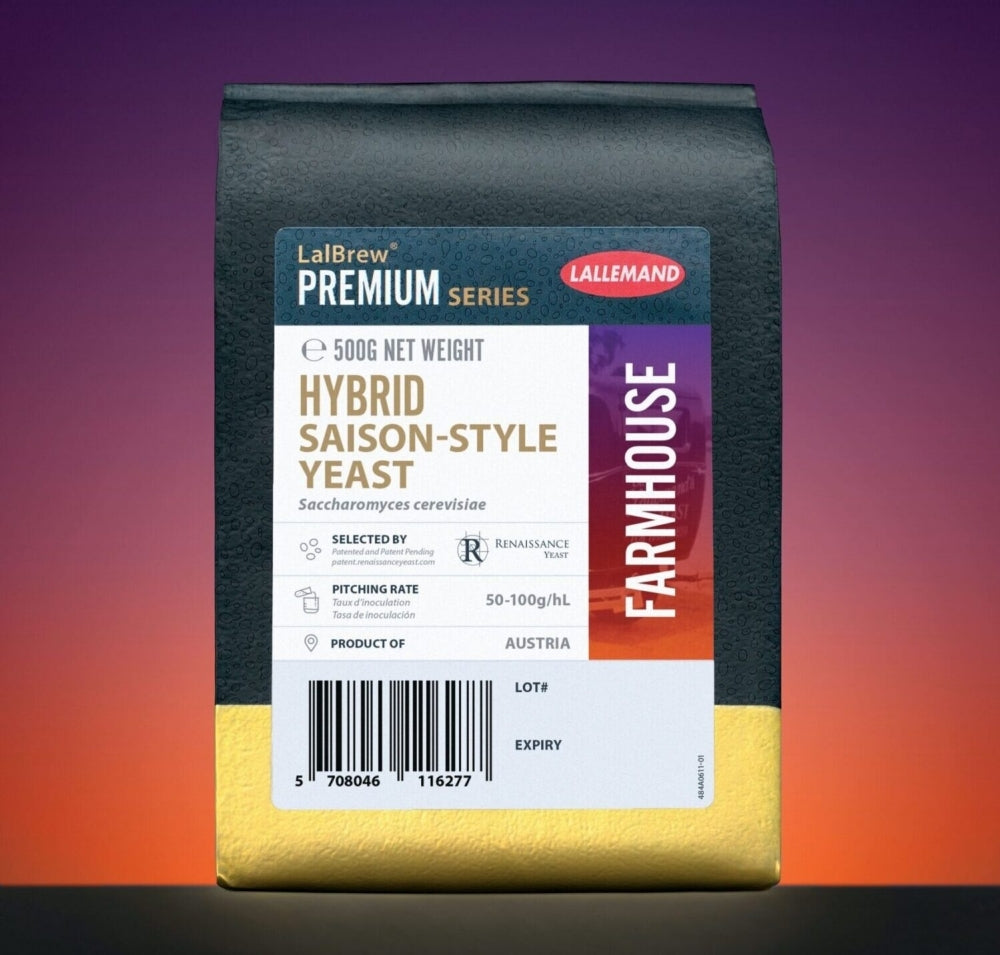
LalBrew Farmhouse 500g – non-diastatic saison yeast
LalBrew Farmhouse from Lallemand is a non-diastatic hybrid strain selected to produce traditional saison flavours and aromas for dry, delicious farmhouse ales all year round. The strain is STA1-negative and GMO-free, and does not carry the cross-contamination risk associated with typical saison strains. The 500 g pack is intended for breweries and larger batches.
Please note: This product is only available in Norway.
Renaissance Yeast in Canada used classical, non-GMO breeding methods to remove the STA1 gene, which gives saison yeast its diastatic activity. Normal sugar utilisation was retained, so the yeast still produces dry saisons. In addition, patented technology from the University of California Davis (USA) ensures the strain does not produce sulphur off-flavours, which enhances the aroma of a classic saison yeast.
LalBrew Farmhouse gives a traditional flavour and aroma with fruity notes, pepper and clove, and high attenuation.
Features
- clove, pepper and tropical fruit
- STA1-negative: does not break down dextrins, so there is no risk of over-attenuation and overcarbonation after packaging
- no sulphur off-flavours (H2S)
- POF positive, which gives the spicy phenols
- vigorous fermentation that can be complete in five days at 22 °C under Lallemand's standard conditions
Technical data
- fermentation temperature: 22–30 °C
- attenuation: 78–84 %
- flocculation: low
- alcohol tolerance: 13 % ABV
- pitch rate: 50–100 g per hl of wort
- pack: 500 g vacuum-packed dry yeast
Specifications and instructions
Frequently asked questions about LalBrew Farmhouse 500g
Is LalBrew Farmhouse diastatic?
No. The STA1 gene has been removed, so the yeast does not break down dextrins. There is no risk of overcarbonation in bottles or kegs, and no contamination of other beers in the brewery.
What temperature should Farmhouse ferment at?
Lallemand specifies 22–30 °C. Higher temperatures give more spice and fruit.
How much yeast do I need?
The recommended pitch rate is 50–100 g per hectolitre of wort, so 500 g covers 500–1000 litres.
Why is the beer hazy after fermentation?
Farmhouse has low flocculation and settles slowly. Give the beer time or use cold and finings if you want it clearer.
Related
Betaling
Your payment information is processed securely. We do not store credit card details nor have access to your credit card information.