Berliner weisse, gose, sour beer. A beloved child has many names, but what is the difference, and how do you brew this type of beer?
Different types of sour beer
When we talk about sour beer, there are mainly two different types. One is the classic and more complex Belgian varieties made with brett (wild yeast) and bacteria, such as gueuze, lambic, and Flemish red and brown. These require a completely different process, and are a topic that deserves an article of its own.
What we are talking about here is kettle sour/kettle-soured beer, mainly the German styles berliner weisse and gose. Even though these are the styles that are kettle soured “by the book”, that does not mean you cannot play around with kettle souring other styles. It is entirely up to you!
Traditionally, these styles are soured with lactic acid bacteria directly in the fermenter. Many believe that is the only “correct” way to sour, but kettle souring is a faster and safer method. With kettle souring, the heat from the boil kills the lactic acid bacteria, and there is no risk of them “infecting” other equipment. That way you avoid the risk of your next beer turning sour too.
Berliner Weisse
Most people are probably familiar with weissbier. The velvety smooth German beer style made with large amounts of wheat, with a flavour like a nicely ripe banana. Add “berliner” in front of the name, and suddenly we have a completely different style.
Like a regular wheat beer, berliner weisse should be brewed with a large proportion of wheat, but it should also have a light to pronounced tartness that comes from lactic acid bacteria. Traditionally it should have a low alcohol content of around 2.5–3.5%, and when it was served it was common to add a fruit juice or syrup directly to the glass.
Even if the complexity is not on a par with the classic Belgian varieties, a berliner weisse can be very fresh and tasty if the balance and acidity are right.
Gose
Gose is in many ways similar to berliner weisse. Gose can have a slightly higher alcohol content (4–5%) than berliner weisse, but the biggest difference is that salt and coriander are added. Here we get a good amount of acidity and fruity flavours, which combined with salt make a very good sour beer. This beer is very popular in combination with fruit.

Malt
Traditionally, a true berliner weisse or gose should have at least 50% wheat, but of course it is entirely up to you how you do it. If you want to kettle sour a pilsner or an IPA, nothing is stopping you, and the process is the same. A good standard base is 50% pilsner or pale, 40% wheat and 10% flaked wheat, oats or barley.
Hops
A kettle-soured beer should not be very bitter. Bitterness and acidity are not always good friends, so that is definitely worth keeping in mind. It is also not recommended to add any hops during souring. Hops are naturally antiseptic and will inhibit the souring process.
Choose a simple German hop such as Strisselspalt, Tettnang, Hersbrucker or other low-alpha-acid hops. Use enough hops at 60 minutes of the boil to reach 5–10 IBU. Beyond that there is no need for more, unless you want to brew a Sour IPA, for example, or experiment.
Yeast
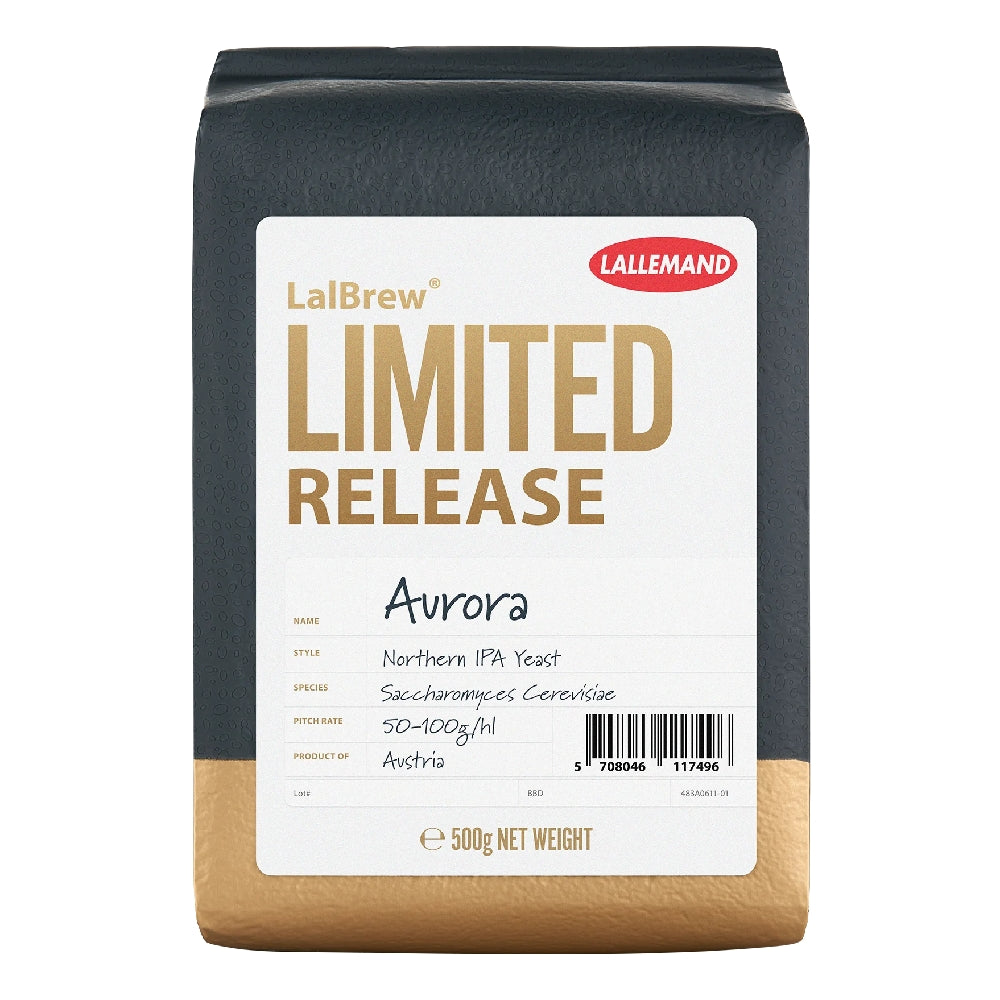
The choice of yeast is not the most important thing in a kettle-soured beer. We can recommend a clean yeast strain such as WLP001, US-05 or S-04. If you want a bit more character in your beer, a wit yeast such as WLP400 or M21 can give good results.
Adding lactic acid bacteria
To sour your beer you need lactic acid bacteria. There are several alternative methods for souring. One example is probiotic digestive tablets, which can often be pricey. Biola will also sour your beer, but experience shows that over time it can give your beer a cheese-like flavour that in most cases is not very pleasant.
Traditionally, a handful of crushed malt was used because it contains natural lactic acid bacteria, but here you should learn a bit more about the process to avoid other microorganisms that have no business in your wort.
For the most control, and to make it as easy as possible, we recommend Lallemand's Sour Pitch, or Helveticus Pitch. These are blends of lactic acid bacteria specially intended for kettle souring. They are put together to give you as much control over the process as possible, fast results and clean flavours.
It can also be an advantage to pre-acidify the wort with lactic acid (lactol). This means adding lactic acid to a pH of around 4.5 before you add the lactic acid bacteria. It gives the lactic acid bacteria a good starting environment, and helps preserve head retention in the finished beer.

Equipment and temperature control
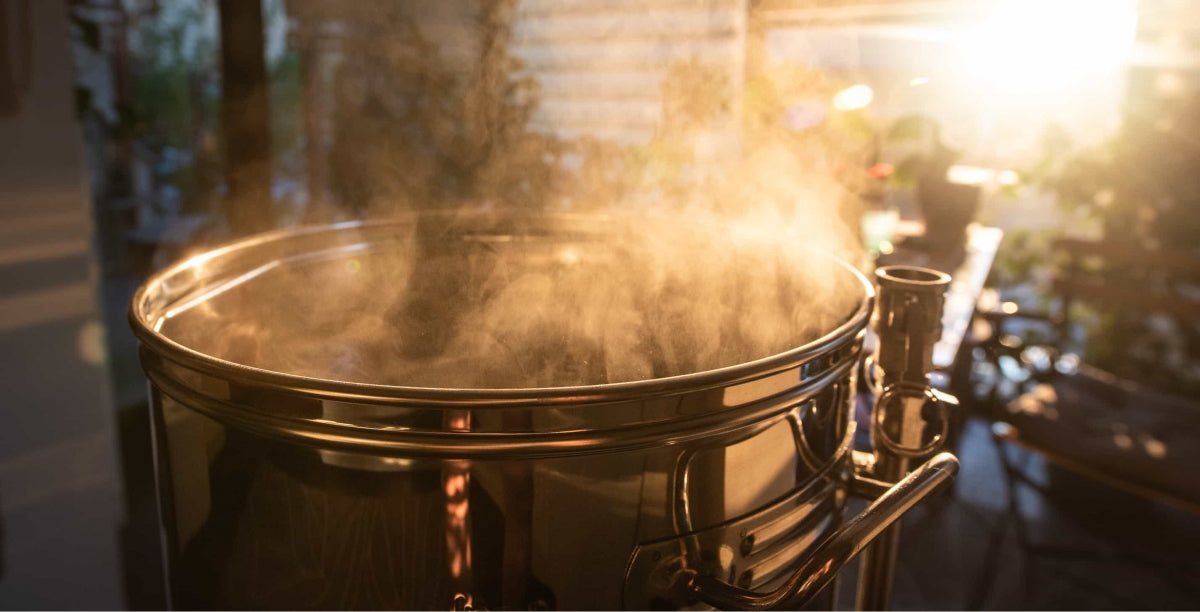
Strictly speaking, you do not need much extra equipment for kettle souring beer, but it is important that you have good control of the temperature. It does not take many degrees above 40 before the lactic acid bacteria die. You also need a lid for the kettle/brewing system, or cling film to cover it. A pH meter is also an advantage, both for pre-acidifying and for checking the pH during the souring process. If you need a pH meter, you will find one in our range of measuring equipment.
Brewing a kettle-soured beer
It is not difficult to brew your own sour beer, but it is important to understand the process to get the right balance. This technique splits your brew day in two, so it is something you can brew on a day when you are a bit short of time. Souring takes time, but is not much work.
- Mash and sparge as usual.
- You should not boil your beer yet, but it can be wise to heat it to 90 degrees to pasteurise, or give it a quick boil to remove any bacteria that could cause unpleasant flavours.
- Cool the wort to 35–40 degrees.
- Measure the pH and add lactol (lactic acid) until you have a pH of around 4.5. Be careful – it takes very little to make a big difference. Use the pH meter often!
- Now add your lactic acid bacteria.
- Cover the kettle. If you have a tight-fitting lid, that is ideal. Otherwise use cling film to keep air out. Lactic acid bacteria are anaerobic, which means they work best without oxygen. If too much air gets in, there is a risk of bringing out flavours you do not want in your beer. If you want to be completely sure, you can flush with CO2 before covering with cling film.
- Keep the temperature of the kettle/brewing system between 35 and 40 degrees, and leave it. There is no fixed answer to how long it should stand. It depends on which bacteria you have used, how much you have used, the temperature and, perhaps most important of all, how sour you want your beer. As a rule, 24 hours is enough, but some will run it even longer. That is up to you. Check with a pH meter along the way, or taste as you go. Remember that the pH will drop a little further after the boil and during fermentation. Better to stop the process a little early than too late.
- When you have reached the acidity you want, you can boil, chill and ferment as usual. After the boil there are no lactic acid bacteria left in the wort, and you can treat it however you like.
Philly Sour as an alternative
Philly Sour is a very special yeast that both sours and ferments your beer in a single fermentation step in the fermenter. After use you can wash your fermenter as normal and reuse it, with no risk of your next brew turning sour.
The only negative thing you can say about Philly is that you do not have as much control over how much acid is produced, unlike kettle souring, where you stop the souring process exactly when you want.
Adding fruit
A plain berliner weisse or gose (or other tart styles) can be fresh and tasty on its own, but these are among the most popular styles for adding fruit. To get as much flavour as possible out of the fruit, we recommend adding it to the fermenter, preferably after high krausen. The fruit contains a fair amount of sugar that the yeast will help itself to, so you will often see more activity in the fermenter after adding fruit.
Make sure fermentation has fully finished before you bottle or keg beer with fruit. Leave it a few days longer than usual to be sure, and take hydrometer readings along the way. If you are adding very acidic fruit, such as raspberries, you should also consider stopping the kettle souring process a little earlier so the end result is not far too sour.
Remember that fresh fruit can often carry wild yeast and other microorganisms. It is therefore recommended to heat-treat it before adding. Boiling tends to change the flavour of fruit, but heating to around 85 degrees for a few minutes will take care of most of them. Freezing will not kill all microorganisms, but it will break down the cell walls in the fruit, so the juice and flavours come out more easily.
The very easiest option is to add one of our fruit purées. These are cleaned, pulped and pasteurised in advance, so you can add them directly to the fermenter after high krausen.
How much fruit purée to add depends entirely on what you like and which characteristics you want the beer to have. But to get some effect from the fruit, we recommend at least 2–3kg in a normal 25L batch.