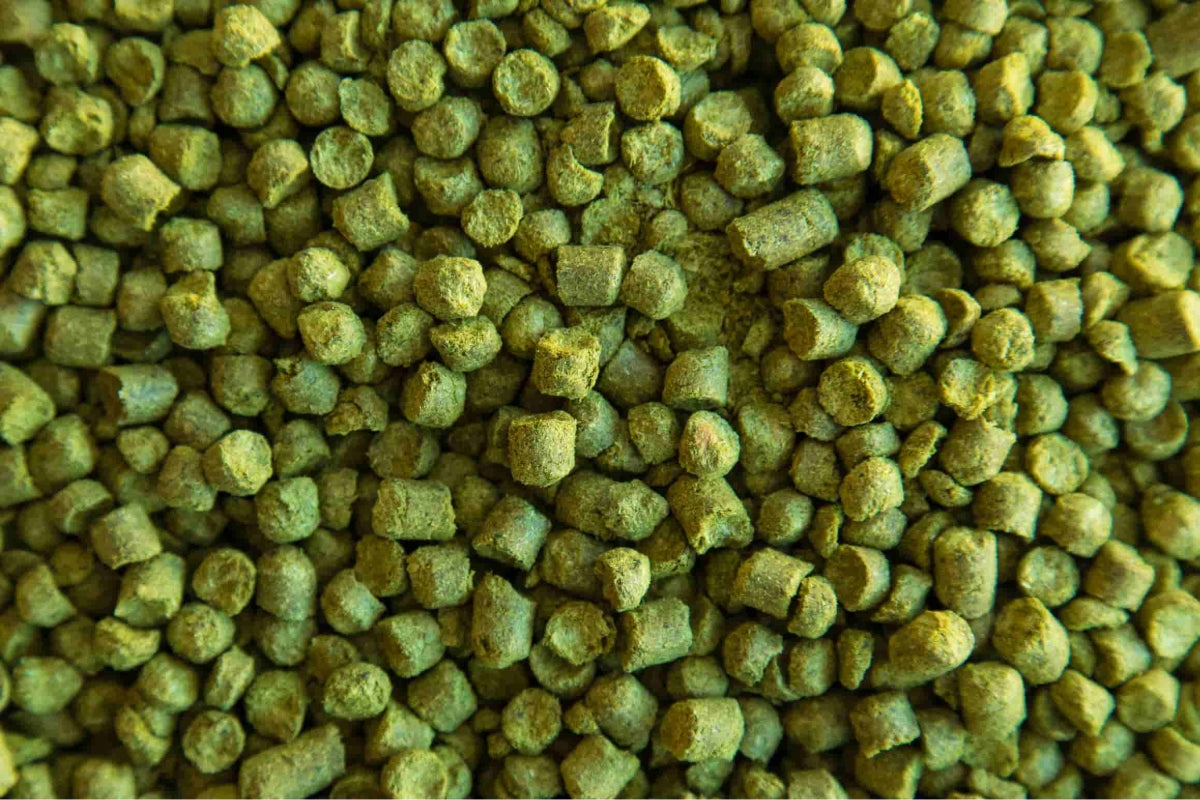
Whirlpool, dry hopping, alpha acid and first wort hops. There are as many terms as there are methods for using hops in beer. In this article we will try to untangle some of these terms around the use of hops in brewing.
The role of hops in brewing
Hops are one of the most important parts of a beer. It is the hops that give beer fresh aroma notes that go in every direction. Everything from pine, pepper, flowers and spice to tropical fruit and berries, citrus and mint. In addition to good flavours, it is also the hops that give beer its characteristic bitterness. Hops also have antiseptic properties, which in the past were absolutely essential for shipping beer around the world without it turning sour. This is part of the story of how India Pale Ale got its name.
It is difficult to describe every hop variety, as there are countless varieties from every corner of the world. Nevertheless, let us take a quick look at some popular hop varieties from different parts of the world, and which flavours and characteristics we can expect.

German hops
Examples of German hops:
- Hallertau Mittelfrüh
- Hersbrucker
- Tettnang
- Strisselspalt
- Perle
Mostly used for: Pilsner and other lager types such as kölsch, bock, Christmas beer and wheat beer. The classic German beer styles.
German brewing tradition involves a lot of lager. This is reflected in the German hop varieties. Here you mostly find flavours and aromas of spice, herbs, flowers and pine. What most German hop varieties have in common is clean and simple flavours that do not completely dominate the beer. Think, for example, of Northern Brewer (originally English, but widely grown in Germany as Hallertauer Northern Brewer) or Magnum, which gives a particularly clean bitterness. In recent years, several more experimental and untraditional varieties have appeared, such as Mandarina Bavaria with big mandarin and lemon flavours, and the completely unique Huell Melon, which brings to mind honeydew melon, strawberry and sweets.
English hops
Examples of English hops:
- Fuggles
- East Kent Golding
- Target
Mostly used for: Typical English styles. Bitter, stout, porter, brown ale, barley wine and English IPA.
English hop varieties often lean towards somewhat calmer flavours, such as grass, flowers, lemon, wood, mint, tea and generally earthy flavours without an overpowering character. Invaluable in English beer styles such as bitter and stouts.
American hops
Examples of American hops:
- Cascade
- Amarillo
- Citra
- Mosaic
- Krush
- Chinook
- Sabro
Mostly used for: Most hop-driven styles such as IPA, APA, NEIPA, amber and steam beer.
American hop varieties are perhaps the most widespread and popular today. They are characterised by big flavour profiles dominated first and foremost by citrus, pine and spice. In recent years the range of hops from America has exploded with a wide spectrum of flavour and aroma, often including tropical fruit, berries and even coconut and wood.
Hops from tropical regions
Examples of hops from tropical regions:
- Nelson Sauvin
- Galaxy
- Southern Passion
- Nectaron
- Vic Secret
Mostly used for: Most hop-driven styles that should have a tropical character, such as NEIPA and IPA.
Places such as Australia, New Zealand and the southern parts of Africa have seen a boom in hop varieties in recent times. These tropical regions have given us hops that are enormously rich in tropical flavours. We are talking passion fruit, pineapple, stone fruit, guava, melon, grapes and grapefruit.
Different flavours from the same hop
Without going into hop aroma and bitterness at a molecular level, let us look at how hops can be used in different ways.
Boil time gives bitterness
To put it briefly, there are three things that affect how much bitterness you end up with in your beer: the amount of hops, boil time and alpha acid. The longer you boil hops, the more bitterness you get from them. Alpha acid also plays a part here.
In most cases, the pack will state how much alpha acid the hops contain. The more alpha acid, the more bitterness they give when boiled. This is why many recipes call for either a large amount, or a high-alpha-acid hop, to go in at the start of the boil. If you want to brew a beer with minimal hop flavour and aroma but only clean bitterness, small amounts of a high-alpha-acid hop are recommended. These should be added at the start of the boil.
First Wort Hops
Some recipes say you should add the first hops at “first wort”. This simply means adding the first hops as soon as you have separated the wort from the mash, before the boil. The effect of this has been much debated, but the reason for adding hops at first wort is said to be a less harsh bitterness.
Aroma and flavour
On the other hand, late hop additions contribute aroma and flavour. A good example of this is the American versions of IPA. Traditionally, an American IPA has been described as a heavily hopped pale ale with high bitterness, also called West Coast IPA. In recent years a variant with low bitterness and big hop flavours has become more and more popular, also called New England IPA (NEIPA). In principle, both of these beer types can be brewed with exactly the same ingredients, but the timing of the hop additions is completely opposite and gives two very different beers.
A widely used method for bringing out hop flavour and aroma, especially in NEIPA, is what is called hopstand or whirlpool. The principle of these two methods is basically the same.
Hopstand
Cool the wort somewhat after the boil. The temperature can vary with the recipe, and is based on the hop varieties, amounts and, not least, which flavours you want to get out of the hops. Typical temperatures are around 70–90 degrees. Add the hops and stir well. Let it steep for a short period. How long varies as much as the temperature, but anything from 10 to 30 minutes is common. This is what is called a hopstand, meaning you leave the hops in hot wort, but not boiling, over time. This extracts flavour and aroma. It also gives some bitterness, but nowhere near as much as boiling.
Whirlpool
Whirlpool is really the same process as described above, but the difference is that the wort is stirred continuously during the hopstand. This can be done either manually with a sanitised mash paddle, or with a pump that circulates the wort the whole time. Since the hops are in constant motion, this prevents them from settling at the bottom of the kettle.
The method prevents tightly packed hops, which could give less flavour and aroma and, in the worst case, settle around the temperature sensor and interfere with it. Another advantage of the whirlpool is that when the wort is fully chilled afterwards, the hops and trub collect in the middle of the kettle. This keeps them from being carried over into the fermentation. If you also use a Trub Stopper, even more of it will be caught thanks to the whirlpool process.
Dry hopping
Dry hopping, simply put, is a term for adding hops to your fermenter during or after fermentation. It is a good method for getting even more hop flavour and aroma into your beer, and absolutely essential in heavily hopped beer styles.
Timing and amounts naturally vary from recipe to recipe, but dry hops are generally added around day 7 to day 9. The more extreme hop bombs often have two or even three dry hop additions along the way (double dry hop and triple dry hop), and this process is part of what gives NEIPA, for example, its characteristic hazy appearance. You should also bear in mind that heavy dry hopping early in fermentation can give your beer a vegetal character, simply because of the large amounts of hop material in contact with the beer over a longer period. For this, Lupomax or Cryo, for example, can be a good alternative that gives plenty of flavour with physically less hop material.
Alternative hop products
There are also alternative products that can give good hop flavours.
Almost the same as HopShot hop oil. The big difference is that HopBurst can be added to your finished beer or used as a dry hop. It will boost flavour and aroma. It also carries no risk of oxidation and can even rescue a beer that lacks flavour or aroma.
- Lupomax
This is a relatively new product on the market. Like cryo, it is hops where the plant material itself has been reduced. You can achieve the same flavour using 70% of the amount you would use with regular hop pellets. Lupomax also has the unique property of being standardised. This means you can use Lupomax year after year and expect the same result from different batches.
Alpha acids, hop oils and flavour should be the same every time. This means that as a brewer you do not need to adjust your recipe if you get a different batch of hops than last time.
Made from regular hops, but with a reduced amount of plant material. In other words, you can use 50 grams of cryo and still get the same flavour and aroma as 100g of regular hops. You only reduce the physical amount of hop material.
Storing hops
Brewers who make a lot of hop-driven beer will always focus on getting the best hops. Hops are a plant. This means that, like all other biological material, they break down over time. That is why storing hops correctly is important for the best possible quality in your finished beer. The very best method is to freeze them. Leftover hops must be packed airtight, and if you have access to a vacuum sealer, that is a good tool. Even if the hops are not from the latest harvest, they will stay fresh and give good flavour for a long time if stored correctly. Read more about this in the blog article written for us by Yakima Valley Hops.
For those interested, we recommend the book The Hops List by Julian Healey. Another good suggestion is the book For the love of hops by Stan Hieronymus. You will then be able to call yourself a true expert in brewing with hops.