What does efficiency mean in brewing?
Brewers like to talk about efficiency on brew day. In most cases this is about how much beer you actually get out of your ingredients. Let us take a closer look at the terms we use when talking about efficiency in brewing.
The starch content of the grain is constant, and the mash converts the starch into sugar – it is this sugar you want to extract from the malt. In short, efficiency is a term that defines the concentration of sugar in the wort compared with the constant amount of sugar in the malt.
Now let us take a deeper dive into the two most important terms used when measuring efficiency: mash efficiency and brewhouse efficiency.
Mash efficiency
All brewing malt contains a specific amount of sugar that you can potentially extract. This figure is what we refer to as 100%, and it can vary between malt types. Here you can see an overview of the potential of different malt types. Neither homebrewers nor professional breweries can extract absolutely all the sugar from the malt, and we use the amount you have actually extracted to calculate mash efficiency.
For an average homebrewer, mash efficiency is around 75 to 80%. This is the figure that tells you what percentage of the sugar you have extracted from the malt.
Measuring efficiency
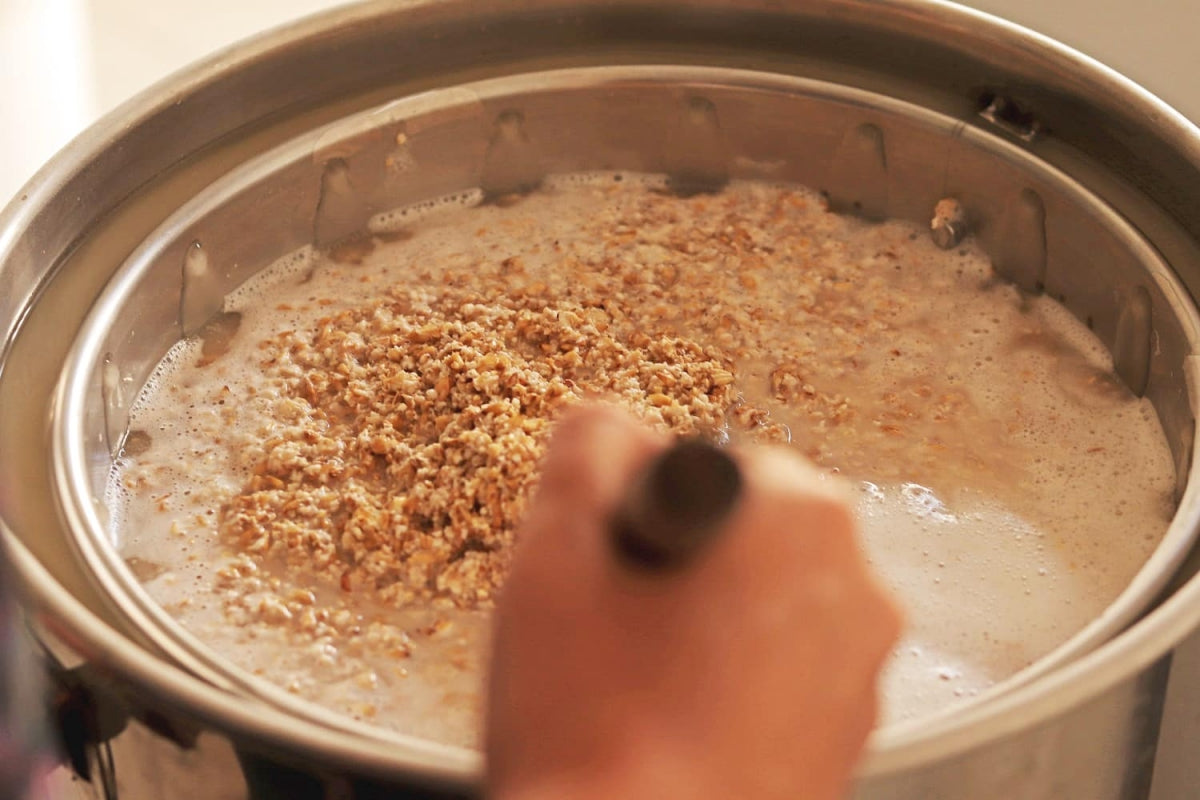
To measure mash efficiency, you need to take the reading after mashing and sparging. Stir the wort well, so any sugar that has settled at the bottom of the kettle mixes well with the rest and gives a correct reading. Take a sample and cool it to room temperature before measuring with a hydrometer or refractometer.
This is the pre-boil gravity (also called SG or Specific Gravity), and shows how much sugar there is in the wort before the boil. With this figure we can work out the mash efficiency. To make this easy, the calculation is built into, for example, Brewfather or calculators such as the Brewhouse Efficiency Calculator from Brewer's Friend, where you select "Efficiency For: Conversion".
Brewhouse efficiency
Now that we know what mash efficiency means, we can move on to brewhouse efficiency.
If, in addition to looking at how much sugar we have extracted from the malt, we also count the other places wort is lost on the way to the fermenter, we can calculate the brewhouse efficiency. That is, how much is lost at the bottom of the kettle, absorption by hops and trub (lots of hops bind more liquid), evaporation during the boil, and wort left behind in hoses when transferring to the fermenter, for example.
In other words, brewhouse efficiency is the measure used to describe how much you actually end up with from your ingredients, and how much has been lost along the way. If you use Brewfather or similar software, this is calculated automatically when you enter the OG (Original Gravity) and the amount of beer in the fermenter.
What do we use efficiency calculations for?
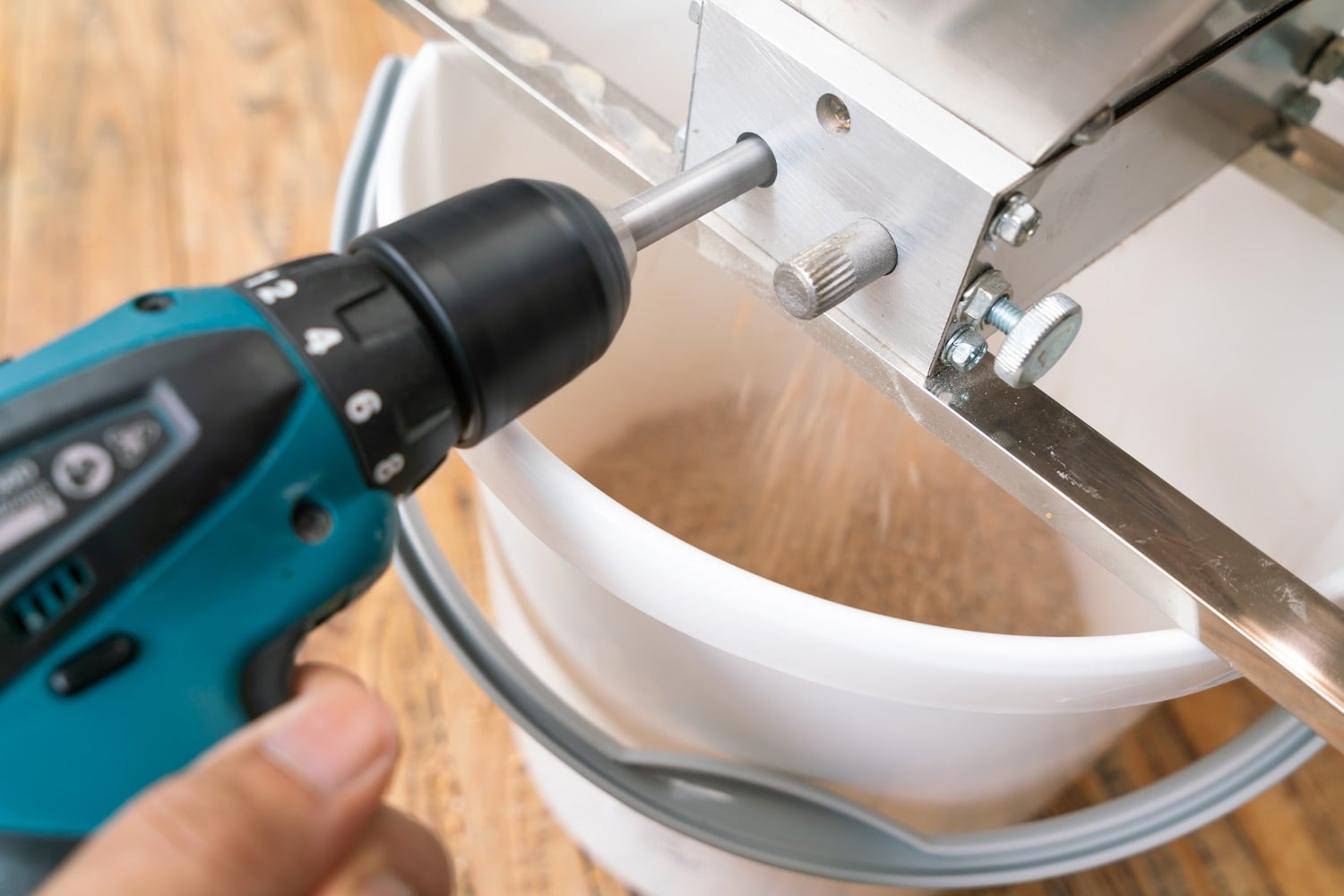
For homebrewers, mash efficiency is perhaps the most important term, because it tells you how much sugar you have actually extracted in the mash. OG affects how much alcohol the finished product will end up with. If this figure is significantly lower than expected, something is not right somewhere, and you may need to take a closer look at your mashing and sparging process, and possibly your water adjustment. How the grain is crushed also matters. If it is crushed too coarsely (lots of whole kernels), you will not get access to the sugar in the malt. If it is crushed too finely, it can prevent good circulation in the mash (stuck mash). What is right varies from setup to setup, so we recommend most brewers to have their own grain mill.
For most people, mash efficiency is not the most important thing in practice, as long as it is consistent. By comparison, a commercial brewery will look more at brewhouse efficiency, since that is about how much beer you actually get out of a brew day. While a homebrewer can easily add 5–10% extra malt to a brew without any significant cost, a professional brewery that brews over 1000 litres at a time will see a dramatic increase in ingredient costs if brewhouse efficiency is low.
If you really want to dig into this topic, we recommend How to brew by John Palmer or Malt: a practical guide from field to brewhouse by John Mallett.