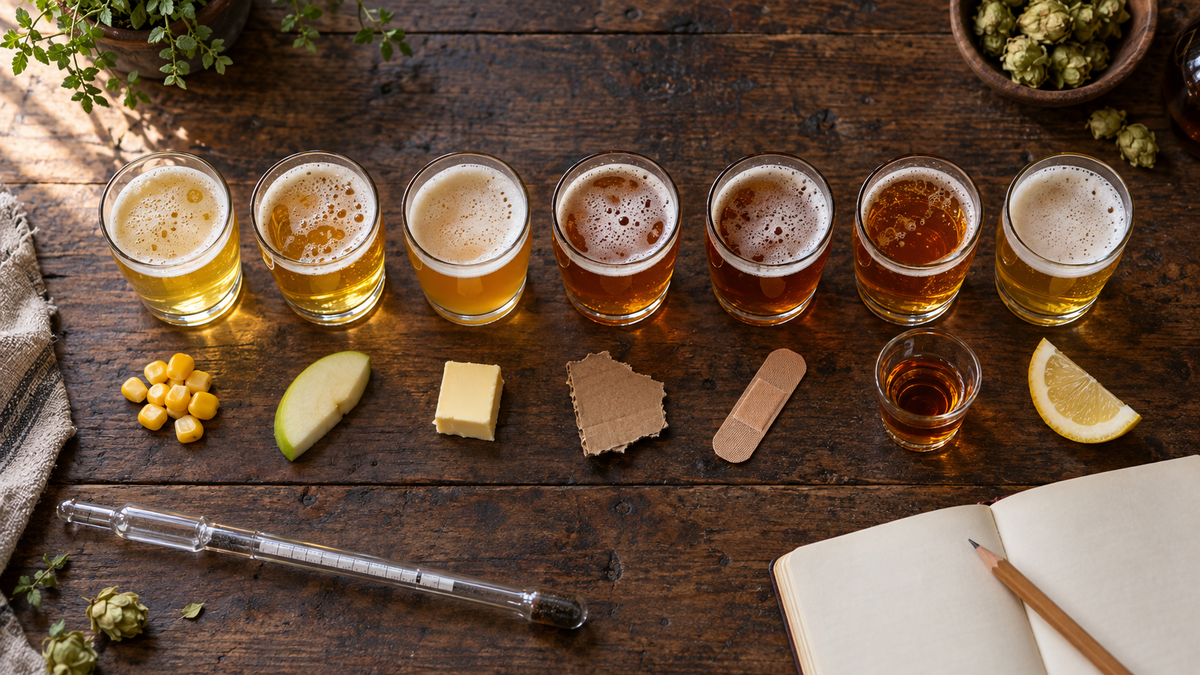
The beer has finished fermenting, the carbonation is right, and then it tastes of something it shouldn't: butter, green apple, cardboard or sticking plaster. Every homebrewer runs into off-flavours sooner or later, and most of them come from a handful of fairly common mistakes.
Fortunately, each off-flavour has a fairly distinctive character, and the cause is usually one of five things: fermenting too warm, too little yeast, bottling before the yeast has finished, oxygen after fermentation or careless cleaning. Here are the most common off-flavours, how to recognise them, and how to avoid them next time.
In short
Among the most common off-flavours in homebrewed beer are fusel (spirits, solvent), oxidation (cardboard, sherry), acetaldehyde (green apple), diacetyl (butter), infection (sour), chlorophenols (sticking plaster) and DMS (cooked corn). The biggest single cause is fermentation that runs too warm and uneven. Stay within the yeast's temperature range, pitch enough yeast, leave the beer until the FG (Final Gravity) has been stable for two–three days and give the yeast time to clean up, avoid oxygen after fermentation, and sanitise everything that touches cold wort and beer.
Which off-flavours are most common in homebrewed beer?
Nobody has counted which off-flavours turn up most often, but competition judges and the industry's sensory training courses point to the same ones. The table gives an overview, and below we go through each of them.
| Off-flavour | Tastes and smells like | Most common cause | Solution |
|---|---|---|---|
| Fusel | Spirits, solvent, nail polish | Fermenting too warm, too little yeast | Temperature control in the first few days |
| Oxidation | Wet cardboard, sherry | Oxygen after fermentation, warm storage | Transfer without splashing, store cool |
| Acetaldehyde | Green apple, grass | Bottled too early | Give the yeast time after FG |
| Diacetyl | Butter, butterscotch | Bottled too early, lager without a rest | Diacetyl rest, more time on the yeast |
| Infection | Sour, vinegar, overcarbonated | Poor cleaning and sanitation | Clean, sanitise, replace scratched plastic |
| Chlorophenols | Sticking plaster, medicine, hospital | Chlorine in the water or sanitiser | Acid-based sanitiser, Campden |
| DMS | Cooked corn, cooked cabbage | Weak boil, slow chilling | Vigorous boil, fast chilling |
Why does the beer taste of spirits or solvent?
A hot, burning alcohol taste, or a smell of nail polish remover and paint thinner, comes from fusel alcohols and esters such as ethyl acetate. The yeast produces them mainly early in fermentation, and the amount rises with temperature. According to the BJCP, the most common causes are a fermentation temperature that is too high, too little yeast, too little oxygen at the start and a high OG (Original Gravity).
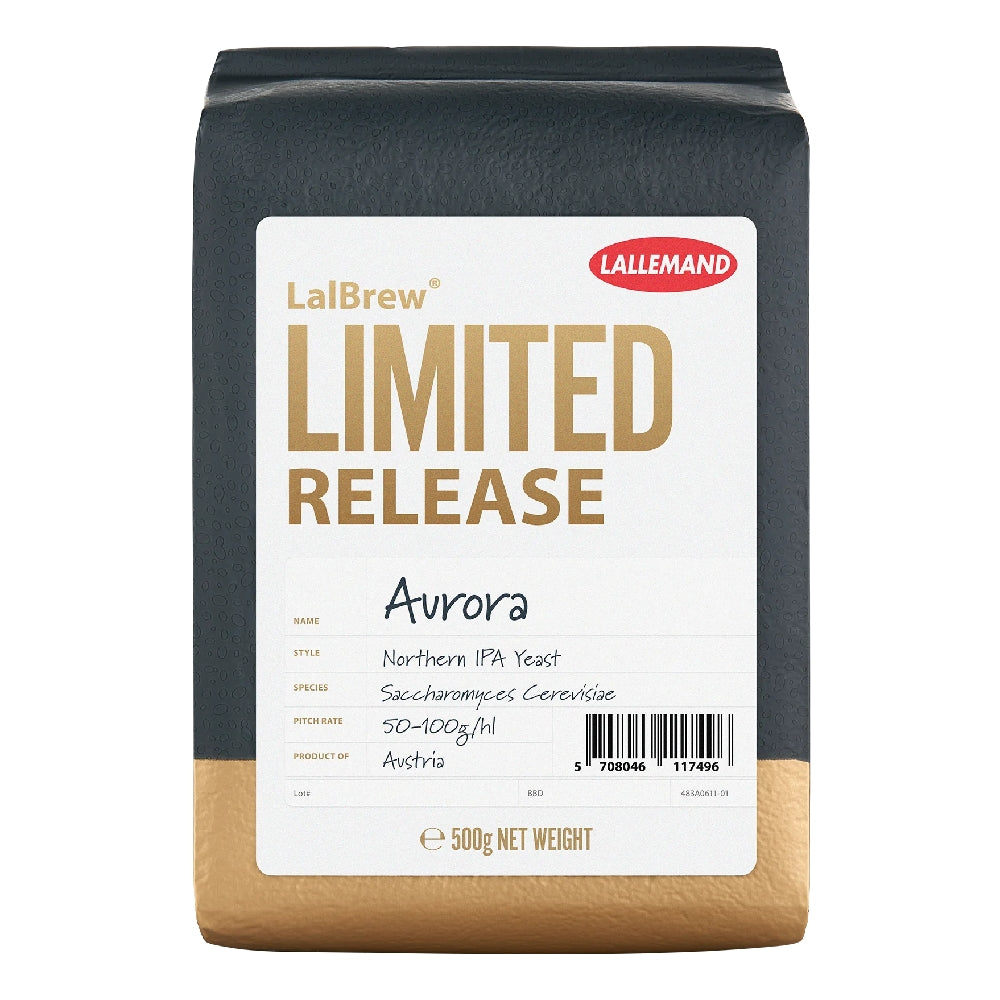
The most common mistake is fermenting at room temperature. Fermentation generates its own heat, so for the first few days the beer is often several degrees warmer than the room, and that is when the damage is done. Keep to the lower end of the yeast's temperature range for the first two–three days, and pitch enough yeast: Lallemand recommends 50–100 g of dry yeast per 100 litres, which works out at 10–20 g for 20 litres.
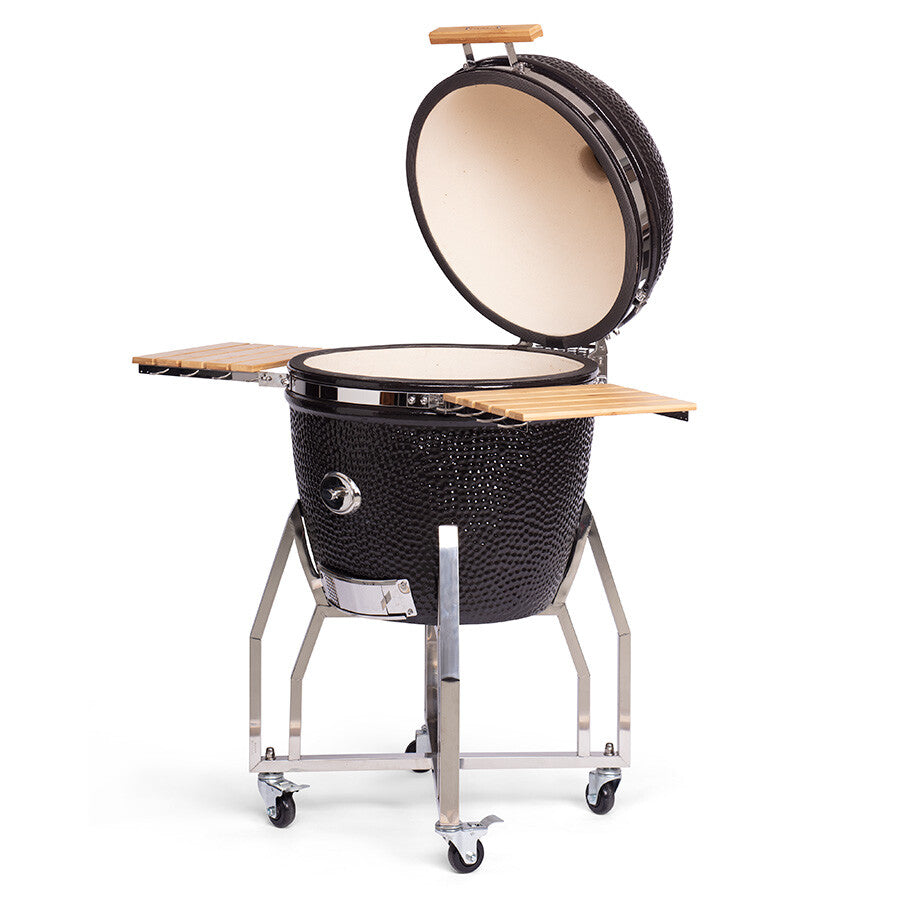
The easiest approach is to let a thermostat control the temperature. An Inkbird ITC-308 with WiFi switches heating and cooling on and off based on the temperature of the beer, for example a heat mat and an old fridge, and lets you follow and adjust the fermentation on your phone. A ready-made fermentation chamber such as the Fercubator cools and heats on its own and has room for a 33L fermenting bucket. With the room at 20°C it can cool down towards 0°C for lager fermentation and cold crashing, and heat up enough for kveik. Read more in the article on why temperature control matters.
A gentle alcohol warmth belongs in strong beers such as imperial stout and barley wine, but a solvent character is never wanted.
Why does the beer taste of cardboard or sherry?
Oxidised beer tastes of wet cardboard or paper, and with longer storage of sherry, nuts and dried fruit. The hop aroma fades, and the colour can darken. The flavour comes from compounds such as trans-2-nonenal, which can be detected in tiny amounts. Vanderhaegen and colleagues show that oxygen and temperature during storage are what drive the process.
Oxygen is good before fermentation and harmful after it. Transfer the beer gently, and run the siphon all the way to the bottom of the bottle or keg so the beer doesn't splash and mix with air. Fill so that little air is left at the top. When dry hopping, take off the lid, sprinkle the hops in carefully without stirring or splashing, and put the lid back on quickly. Store the beer cool and dark, and drink hoppy beers while they are fresh. Trials suggest that the damage mainly shows up over time and with warm storage, so a beer that is drunk quickly and kept cold can tolerate more. Oxycaps are crown caps that bind the oxygen in the neck of the bottle. There is more on this in the article on oxidation of beer.
If the beer smells of cat pee or burnt rubber, it is lightstruck. It is the same smell many people know from beer in clear or green bottles that has been left in the sun. Light breaks down hop compounds in a short time, so use brown bottles and store them in the dark.
Why does the beer taste of green apple?
Acetaldehyde tastes of freshly cut green apple, grass or emulsion paint. It is a natural intermediate when the yeast makes alcohol, and the yeast reabsorbs it towards the end of fermentation. If the beer tastes of green apple, it has almost always been bottled before the yeast had finished.
The airlock no longer bubbling does not mean fermentation is finished. Measure with a hydrometer, and wait until the FG has held steady for two–three days. It is a good idea to give the beer a few extra days on the yeast after that. Enough healthy yeast and no oxygen after fermentation take care of the rest.
Why does the beer taste of butter?
Diacetyl tastes of butter, butter popcorn or butterscotch, and gives a slick, almost oily mouthfeel. Some people are very sensitive to it, others barely notice it. Krogerus and Gibson explain the mechanism: the yeast excretes a precursor that gradually turns into diacetyl in the beer. The yeast then takes up the diacetyl and converts it into something flavourless, but only if it is still active and has time. The conversion is faster when it is warm.
That is why diacetyl appears when the beer is bottled or cold crashed too early, most often in lagers fermented cold. If the buttery flavour shows up after several weeks in the bottle or keg, it is a sign of infection.
1. Do a diacetyl rest
When two-thirds to three-quarters of the sugar has fermented out, raise the temperature to about 18–20°C for two–three days. The yeast then cleans up before you cool the beer down. Ales don't need a separate rest, but leave the beer on the yeast for a few days after activity has died down.
2. Test before you bottle
Take two small samples. Heat one of them to 60–70°C for 10–20 minutes, let it come back to room temperature, and smell both. If the heated sample smells of butter, the precursor is still in the beer, and it needs more time on the yeast.
A little diacetyl is acceptable in some styles, including Czech pilsner and English bitter.
Why is the beer sour or overcarbonated?
Lactic acid bacteria give a yoghurt- or sourdough-like sourness, acetic acid bacteria give vinegar, and wild yeast can give clove, plastic and too much carbonation. A beer that foams over when you open the bottle, or bottles that turn rock hard from pressure, are often a sign that something other than your yeast has taken over.
The cause is almost always cleaning and sanitation. Clean first, then sanitise everything that comes into contact with cold wort and beer: fermenter, lid, airlock, tubing, taps and bottles. Use Chemipro San at the right dilution, and replace tubing and plastic parts with scratches, where bacteria can hide. Pitch enough yeast quickly, so that the yeast takes over before anything else can gain a foothold. Read more in the article on cleaning and sanitising brewing equipment.
Why does the beer taste of sticking plaster or medicine?
Chlorophenols taste of sticking plaster, mouthwash, hospital or plastic, and can be detected at just a few millionths of a gram per litre. They form when chlorine reacts with phenols from malt, hops and yeast.
The most common source is a chlorine-based sanitiser that has not been rinsed off. Use an acid-based no-rinse sanitiser instead. The other source is the water. According to the Norwegian Institute of Public Health, Norwegian drinking water is mostly lightly chlorinated or not chlorinated at all, but some waterworks use chlorine or chloramine. Free chlorine evaporates if the water is left to stand or is boiled, but chloramine does not. Campden removes both in a few minutes, and very little is needed: about 0.1 g for 20 litres of brewing water, in other words a pinch. The dosage on the packet is for wine and must. If you are unsure, ask your water supplier.
Why does the beer taste of cooked corn?
DMS tastes of cooked or creamed corn, cooked cabbage or tomato sauce. Malt, especially pale pilsner malt, contains a precursor that is converted to DMS while the wort is hot. During a vigorous boil the DMS evaporates, but once the boil ends it keeps forming without being driven off, until the wort drops below about 80°C (Scheuren and colleagues).
Boil without a lid, with a vigorous, rolling boil that evaporates about 8–10% of the volume per hour. Then chill quickly. A counterflow chiller is the best choice for regular brewing: the wort is pumped through a tube surrounded by cold water and constantly meets cold tubing, whereas an immersion coil in the kettle loses efficiency as the water around it warms up. A copper counterflow chiller takes 50 litres from 100 to 20°C in about five minutes with cold tap water. Modern malt contains less of the precursor than it used to, and trials have found no measurable DMS even after a short boil, so the risk is greatest when you use a lot of pilsner malt and chill slowly.
If you brew with a Fresh Wort Kit, the boiling and chilling have already been done at the brewery, so DMS is not something you need to think about.
What about metallic flavours and sulphur?
A metallic taste, like blood or coins, usually comes from iron in the water, rust or a pot with chipped enamel. With stainless steel equipment and mains water it is rarely a problem. Sulphur, like rotten eggs, is common while lager yeast is working, but usually disappears with the carbonation and a few weeks of conditioning. Give the beer time before you draw any conclusions.
Common mistakes
Fermenting at room temperature. Fermentation heats up the beer by itself, and in the first few days the beer quickly ends up several degrees warmer than the room. That produces fusel and esters. Measure the temperature of the beer, not the room.
Bottling too early. A quiet airlock is not the same as a finished fermentation. And even once FG is reached, the yeast needs a few more days to clean up off-flavours. If you bottle too early, you get green apple, butter and, at worst, bottles with too much pressure.
Too little yeast. One packet of dry yeast is enough for a beer of normal strength at 20 litres. In stronger beers the yeast becomes stressed when there is too little of it, and stressed yeast produces more fusel, acetaldehyde and diacetyl.
Oxygen after fermentation. Splashing during transfer and warm storage give cardboard and sherry flavours after a few weeks. Aeration belongs before fermentation, not after.
Chlorine in the sanitiser. Chlorine-based products that are not completely rinsed off give a sticking-plaster flavour that does not go away.
Get started
The most important investment against off-flavours is temperature control. Choose between an Inkbird ITC-308 with WiFi and a heat mat, a complete fermentation chamber such as the Fercubator Connect, or see the full range for fermentation temperature control. If you brew from scratch, a counterflow chiller gives fast chilling after the boil. Follow the fermentation with a hydrometer or Tilt, and give the yeast a good start with Servomyces yeast nutrient. You can read more about giving the yeast a good start in the articles on oxygenating wort and yeast starters.
Sources
- Krogerus, K. and Gibson, B. R. (2013): «125th Anniversary Review: Diacetyl and its control during brewery fermentation», Journal of the Institute of Brewing 119(3), 86–97.
- Vanderhaegen, B., Neven, H., Verachtert, H. and Derdelinckx, G. (2006): «The chemistry of beer aging – a critical review», Food Chemistry 95(3), 357–381.
- Scheuren, H. et al. (2014): «Decomposition kinetics of dimethyl sulphide», Journal of the Institute of Brewing 120.
- BJCP: «Beer Exam Study Guide – Troubleshooting».
- Cicerone Certification Program and Aroxa (2013): «Off-Flavor Reference».
- Folkehelseinstituttet (2024): «Kjemikalier i drikkevann», Drikkevannshåndboka.
- Lewis, A.: «How do you account for evaporation loss during an aggressive boil?», Brew Your Own.